Products List
-
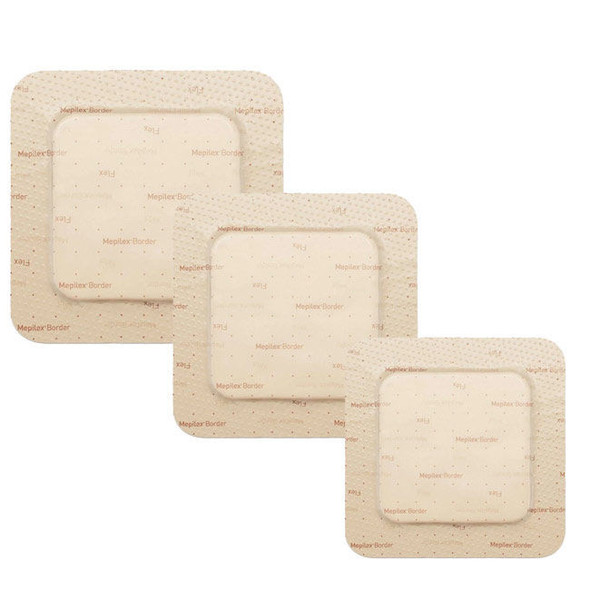
 Sku: 1988Mepilex
Mepilex Border Flex - Self-Adherent Soft Silicone Foam Dressing
$23.95 - $541.953" x 3", 4" x 4" and 6" x 6", Box of 5, Case of 10 boxes (50)Adheres securely but gentlyCan be removed without causing further trauma to the woundMaintains a moist wound environment to promote... -
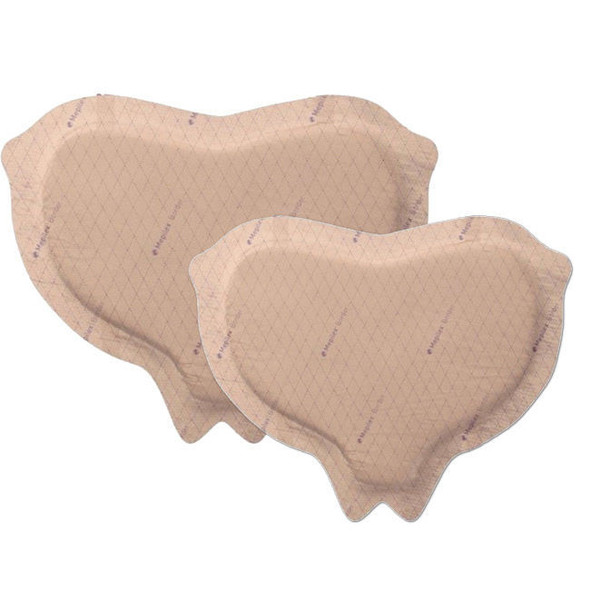
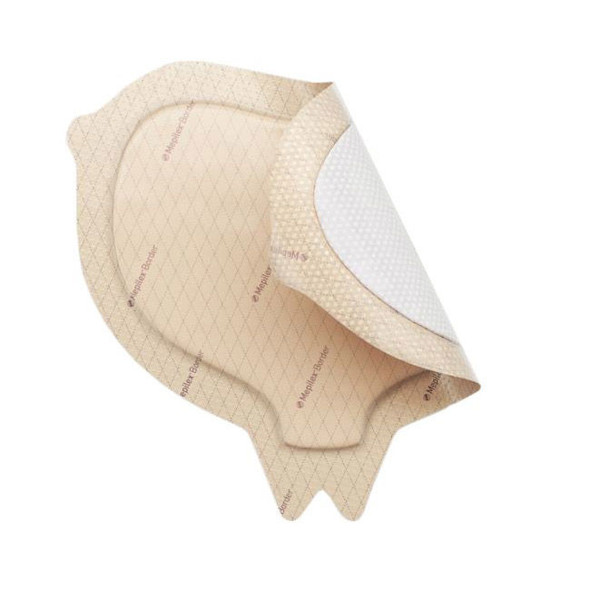 Sku: 4081Mepilex
Molnlycke Mepilex Border - Sacrum Foam Dressing
$12.95 - $197.95Latex freeCan be repositionedUse on medium to high exuding woundsMinimizes pain and skin damage during dressing changesMolnlycke Mepilex Border - Sacrum Foam Dressing is a five layer foam dressing... -

 Sku: 4167Mepilex
Molnlycke Mepilex - Silicone Foam Dressing
$31.45 - $426.95Wear up to 7 daysSuitable for use beneath compression dressingsAbsorbs exudate and minimizes the risk of macerationLift for wound inspection without losing adhesive properties4" x 4": box of 5, case... -

 Sku: 1986Mepilex
Mepilex Border Flex Lite Sterile Self-adherent Soft Silicone Foam Dressing
$17.95 - $487.45A thin, comfortable, all in one foam dressing that conforms to the bodyMoisture and bacteria proof film backingReduces the risk of macerationAdheres gently and securely to dry, intact surrounding... -

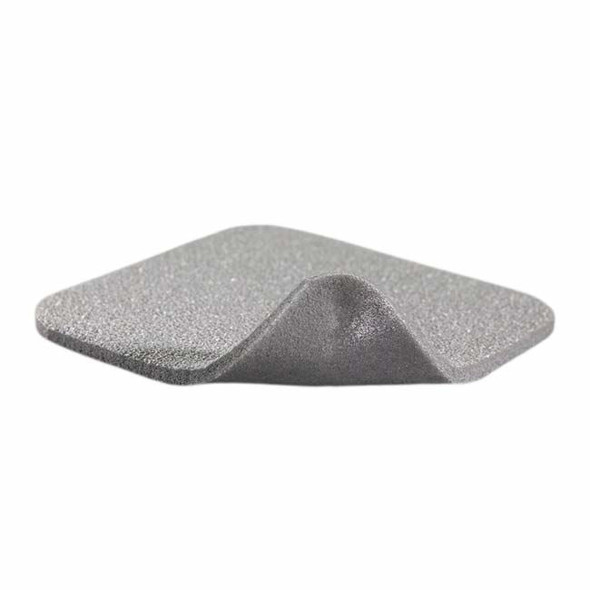 Sku: 1987Mepilex
Molnlycke Mepilex Ag - Antimicrobial Soft silicone Foam Dressing
$14.45 - $69.95Minimizes risk of maceration and helps reduce odorReleases silver for up to 7 daysUse under compression bandagesBegins to work within 30 minutesLift and adjust without loss of adherent... -

 Sku: 2974Smith and Nephew
Allevyn - Gentle Border Wound Dressing
$39.45 - $268.95Promotes faster healingCost effective wound dressingLonger wear time to minimize pain and traumaGentle adhesive for easy removalBox of 10, Case of 4 boxesAllevyn Gentle Border Wound Dressing is... -

 Sku: 3629Smith and Nephew
Allevyn - Gentle Border Lite Dressing
$23.95 - $256.95Promotes faster healingCost effective wound dressingSilicone Gel adhesive for easy removalGentle Border Lite dressings mold to body contoursBox of 10, case of 6 boxes (60). 6" x 6" is only sold by... -

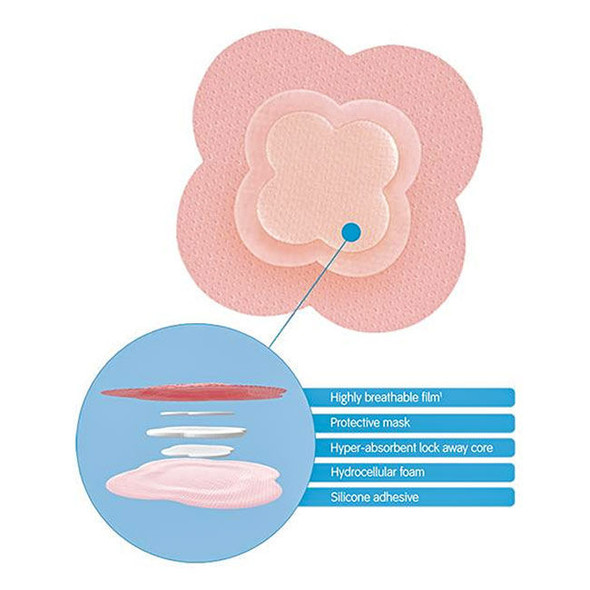 Sku: 4015Smith and Nephew
Allevyn Life - Hydrocellular Foam Dressing
$38.45 - $86.45Quadrilobe shape allows for patient to shower with easeCreates a moist wound environmentMinimizes visual impact, making it less noticeable under clothingProvides cushioning and helps spread pressure... -
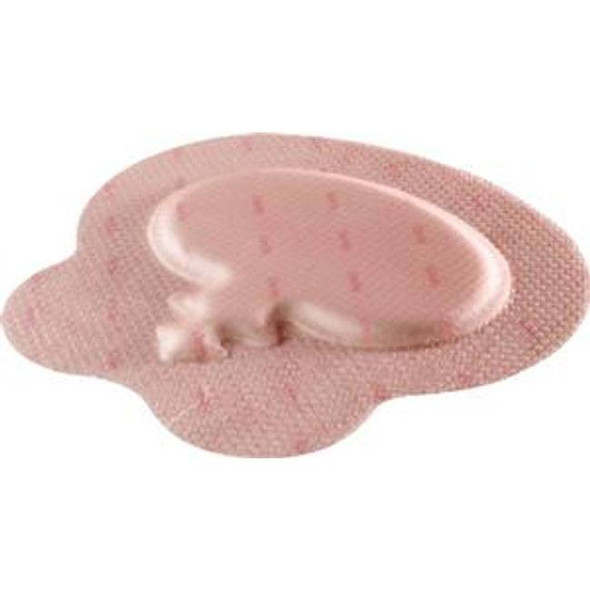
 Sku: 4495Smith and Nephew
Allevyn - Gentle Border Sacrum Dressing
$11.95 - $115.45Wide adhesive borderIdeal for delicate skinReduces risk of infectionUnique shape and 3 slits for proper fitAllevyn - Gentle Border Sacrum Dressing is a flexible foam dressing that is specially shaped... -

 Sku: 3750Convatec Aquacel
Aquacel - Foam Dressing with Adhesive Border
$69.45 - $99.45Gentle silicone border is designed to adhere to surrounding skin not wound bedVertical wicking prevents lateral spread of fluid, reducing risk of macerationSkin friendly adhesive supports simple... -

 Sku: 33362Medline Industries
Medline Optifoam Gentle LQ Silicone-Faced Foam Wound Dressings
$71.45 - $135.95Waterproof film acts as a bacterial barrierFoam and superabsorbent core absorb and retain exudateSilicone adhesive minimizes trauma and reduces pain upon wear or removalIndications: partial and... -
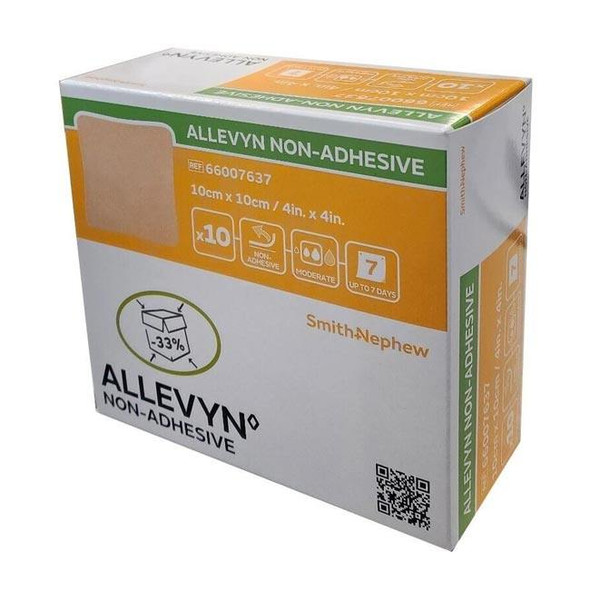
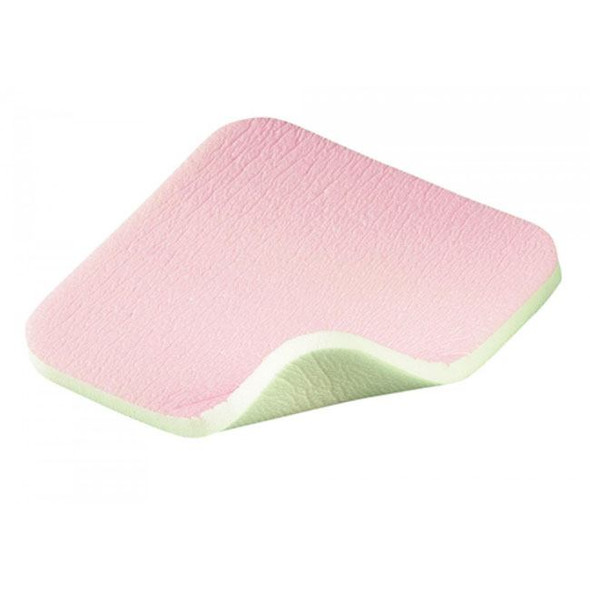 Sku: 2264Smith and Nephew
Allevyn Non-Adhesive Foam Wound Dressing
$5.00 - $45.45Allevyn Non-Adhesive Foam Dressing Waterproof Creates a moist wound environment Foam dressing can be cut to fit dress wounds in awkward areas Highly absorbent wound dressing that will not break down... -
 Sku: 3492Mepilex
Molnlycke Mepilex Lite - Foam Dressing
$25.95 - $253.95Conforms to the bodyMaintains moist wound environmentReduces the risk of macerationMinimizes pain and trauma to the wound during dressing changesMolnlycke Mepilex Lite - Foam Dressing is a thinner... -

 Sku: 33370Medline Industries
Medline Optifoam Gentle LQ Silicone-Faced Foam Sacral Dressing
$87.95 - $155.45Optifoam gentle silicone-faced foam sacral dressing with liquitrap super absorbent core Waterproof film acts as a bacterial barrier to support healing Skin friendly silicone adhesive minimizes... -

 Sku: 32571Medline Industries
Optifoam Gentle - Silicone Faced Foam Dressing
$92.45 - $181.45Primary or secondary useLatex free and sterileCan be cut to sizeLow friction dressingOptifoam Gentle - Silicone Faced Foam Dressing provides gentle adhesive to create an optimum healing condition... -
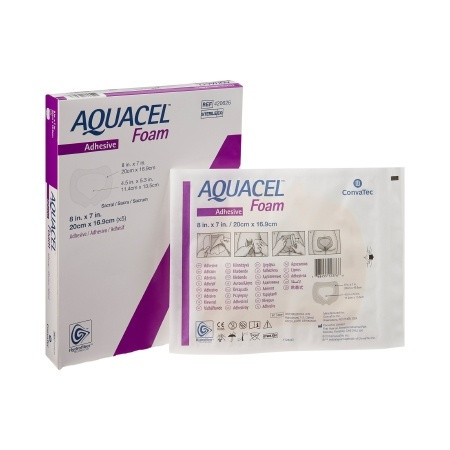
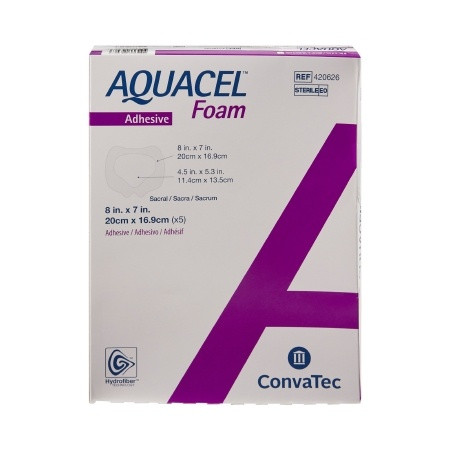 Sku: 802599Convatec Aquacel
Foam Dressing Aquacel® 7 X 8 Inch With Border Film Backing Silicone Adhesive Sacral Sterile
$18.91 - $91.89Silicone adhesive is gentle on skin to reduce irritation and pain, enabling the dressing to be changed without stripping epidermal cells. Unique tapered edge allows dressing to lay smooth around... -

 Sku: 33208Convatec Aquacel
ConvaTec Aquacel Pro Foam Sacral Dressing
$54.45 - $84.958" x 7" or 9" x 8"Box of 5Adhesive silicone hydrofiber sacral foam dressingPeri-wound protection, no lateral spreadDefends against skin breakdown and macerationNurtures skin and creates an... -
 Sku: 4013Molnlycke
Molnlycke Mepiform - Soft Silicone Dressing (Scar Treatment Therapy)
$32.45Conforms to body contoursWaterproof with UV protectionAverage wear time between dressing changes are 3-7 daysClinically proven to reduce scarringMolnlycke Mepiform - Soft Silicone Dressing (Scar... -
 Sku: 4496Smith and Nephew
Allevyn - Adhesive Hydrocellular Foam Dressing
$56.45Soft cushioned padAdhesive border for securityWaterproof and bacteria resistantCreates a moist wound environmentAllevyn - Adhesive Hydrocellular Foam Dressing is a three-layer wound dressing designed... -

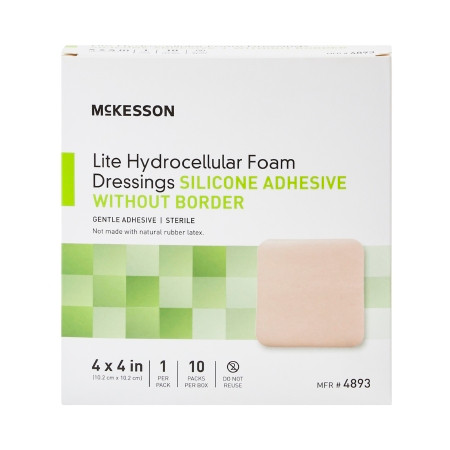 Sku: 1083093McKesson
McKesson Lite Hydrocellular Thin Foam Dressing 4 X 4 With Silicone Gel Adhesive
$3.47 - $33.70McKesson Lite Hydrocellular Foam Dressings without Border, Silicone Adhesive Wide range of acute and chronic wounds like venous leg ulcers, pressure ulcers, diabetic ulcers and traumatic wounds... -
 Sku: 3331Mepilex
Molnlycke Mepilex - Foam Heel Dressing
$89.95Box of 5Conforms to any shaped heelThe pad will not stick to the woundAbsorbs exudate and prevents macerationMolnlycke Mepilex - Foam Heel Dressing is shaped to fit any heel. This heel dressing is... -

 Sku: 11853M
3M Tegaderm - Round Foam Adhesive Dressing
$38.45 - $148.95Water resistantHighly absorbent, yet breathableRound shape is recommended for elbow and heel woundsAdheres to dry or moist skinSoft spoke design makes application easy3M Tegaderm - Round Foam... -
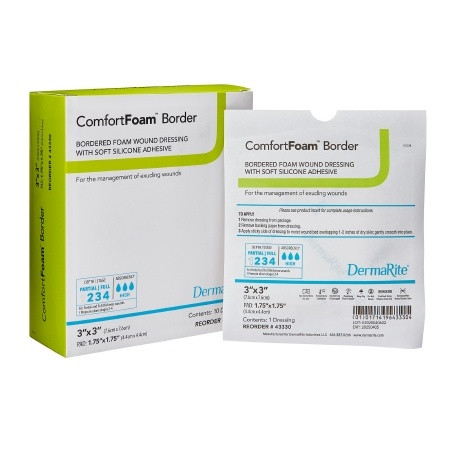
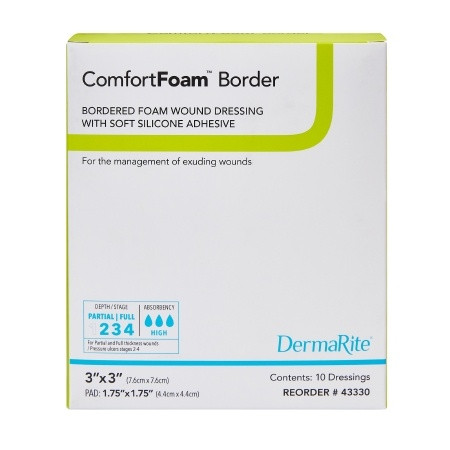 Sku: 946493DermaRite
Foam Dressing ComfortFoam™ Border 3 X 3 Inch With Border Film Backing Silicone Adhesive Square Sterile
$3.32 - $32.29Silicone adhesive is gentle on patients' skin to reduce irritation and pain, enabling the dressing to be changed without stripping epidermal cells. Unique tapered edge allows dressing to lay smooth... -
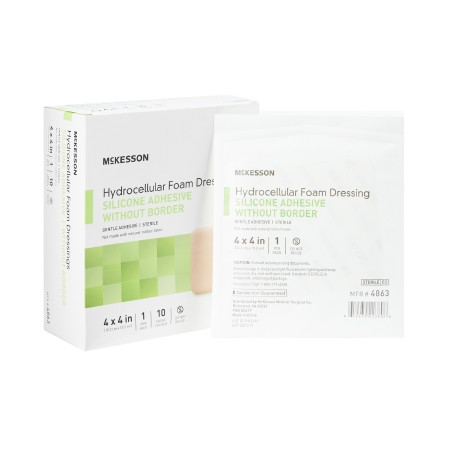
 Sku: 1083086McKesson
McKesson Hydrocellular Foam Dressing 4 X 4 Silicone Adhesive Without Border
$4.21 - $40.86McKesson Hydrocellular Foam Dressings, Silicone Adhesive. Wide range of acute and chronic wounds like venous leg ulcers, pressure ulcers, diabetic ulcers and traumatic wounds. Accommodates acute and... -
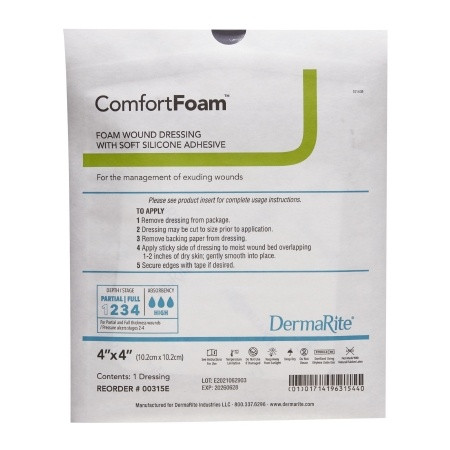
 Sku: 835615DermaRite
Foam Dressing ComfortFoam™ 4 X 4 Inch Without Border Film Backing Silicone Adhesive Square Sterile
$3.50 - $34.00Silicone adhesive is gentle on patients' skin to reduce irritation and pain, enabling the dressing to be changed without stripping epidermal cells. Unique tapered edge allows dressing to lay smooth... -

 Sku: 32456Convatec Aquacel
Aquacel - Non Adhesive Foam Wound Dressing
$73.95Waterproof wound dressingFilm backing allows excess moisture to evaporate, preventing macerationAbsorbs exudate and creates a gelAntibacterial barrierAquacel - Non Adhesive Foam Wound Dressing has a... -

 Sku: 1138302McKesson
McKesson Hydrocellular Foam Dressing 4 X 4 Inch
$3.43 - $327.75McKesson Hydrocellular Foam Dressing, Non-Adhesive, with Film Backing. Unique tapered edge allows dressing to lay smooth around wound edges. Dressing core supports fast absorption and helps minimize... -
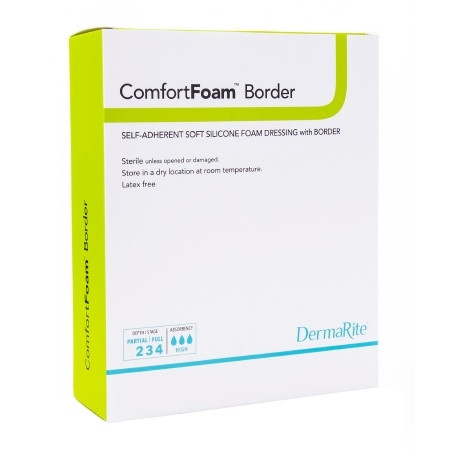
 Sku: 946494DermaRite
ComfortFoam™ Border Foam Dressing 4 X 8 Inch With Border Film Backing Silicone Adhesive Rectangle Sterile
$7.15 - $34.73ComfortFoam™ Border Foam Dressing 4 X 8 Inch with silicone adhesive is gentle on skin to reduce irritation and pain, enabling the dressing to be changed without stripping epidermal cells. Unique... -

 Sku: 835614DermaRite
Foam Dressing ComfortFoam™ 6 X 6 Inch Without Border Film Backing Silicone Adhesive Square Sterile
$3.78 - $36.66Silicone adhesive is gentle on patients' skin to reduce irritation and pain, enabling the dressing to be changed without stripping epidermal cells. Unique tapered edge allows dressing to lay smooth... -
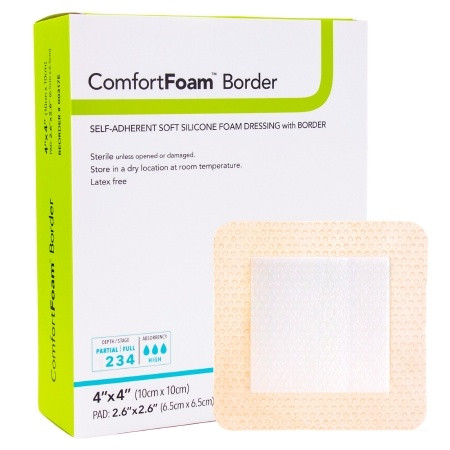
 Sku: 835617DermaRite
Foam Dressing ComfortFoam™ Border 4 X 4 Inch With Border Film Backing Silicone Adhesive Square Sterile
$3.85 - $37.95Silicone adhesive is gentle on patients' skin to reduce irritation and pain, enabling the dressing to be changed without stripping epidermal cells. Unique tapered edge allows dressing to lay smooth... -

 Sku: 886432McKesson
Foam Dressing McKesson 4 X 4 Inch With Border Film Backing Silicone Adhesive Square Sterile
$5.60 - $1,073.20McKesson Hydrocellular Foam Dressing, Silicone Adhesive Silicone adhesive is gentle on skin to reduce irritation and pain, enabling the dressing to be changed without stripping epidermal cells... -
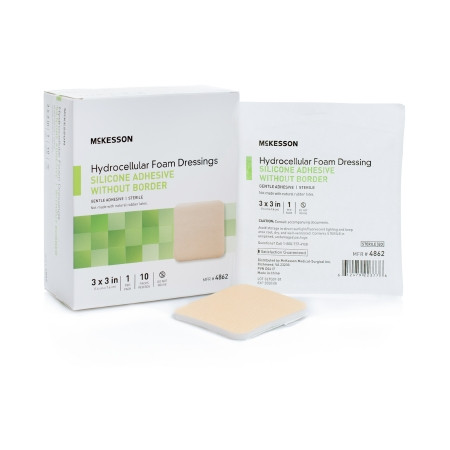
 Sku: 1083085McKesson
McKesson 3 X 3 Hydrocellular Foam Dressing with Silicone Gel Adhesive
$2.04 - $392.42McKesson Hydrocellular Foam Dressings with Silicone Adhesive. Wide range of acute and chronic wounds like venous leg ulcers, pressure ulcers, diabetic ulcers and traumatic wounds. Accommodates acute... -

 Sku: 1083087McKesson
McKesson Hydrocellular Foam Dressing 6 X 6 Inch With Silicone Adhesive
$5.28 - $51.30McKesson Hydrocellular Foam Dressing with Silicone Adhesive. Wide range of acute and chronic wounds like venous leg ulcers, pressure ulcers, diabetic ulcers and traumatic wounds. Accommodates acute... -

 Sku: 7669Hartmann Wound Management
Proximel Silicone Bordered Foam Dressing - 6" x 6"
$34.75 - $245.15Proximel Silicone Bordered Foam Dressing - 6" x 6" This product is available in a box of 5 or in a case of 10 boxes. The Proximel Silicone Bordered Foam Dressing in the 6" x 6" size is built for... -
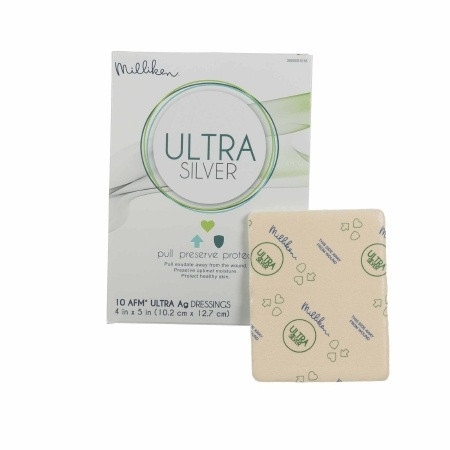 Sku: 795840Ultra Silver
Silver Foam Dressing Ultra Silver 4 X 4 Inch Square Sterile
$18.15 - $1,737.90ULTRA Silver combines the moisture management benefits of a three-part design with a proprietary ceramic silver ion technology. This controlled release of ionic silver inhibits a broad spectrum of... -
 Sku: 815923Coloplast Skin Care
Foam Dressing Biatain® Silicone 4 X 4 Inch With Border Film Backing Silicone Adhesive Square Sterile
$79.57Silicone adhesive is gentle on patients' skin to reduce irritation and pain, enabling the dressing to be changed without stripping epidermal cells. Unique tapered edge allows dressing to lay smooth... -
 Sku: 835616DermaRite
Foam Dressing ComfortFoam™ Border 6 X 6 Inch With Border Film Backing Silicone Adhesive Square Sterile
$7.69 - $74.69Silicone adhesive is gentle on patients' skin to reduce irritation and pain, enabling the dressing to be changed without stripping epidermal cells. Unique tapered edge allows dressing to lay smooth... -
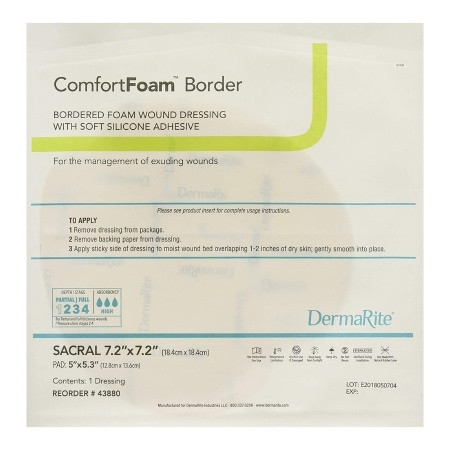
 Sku: 944933DermaRite
Foam Dressing ComfortFoam™ Border 7-1/5 X 7-1/5 Inch With Border Film Backing Silicone Adhesive Sacral Sterile
$9.90 - $48.06Silicone adhesive is gentle on skin to reduce irritation and pain, enabling the dressing to be changed without stripping epidermal cells. Unique tapered edge allows dressing to lay smooth around... -
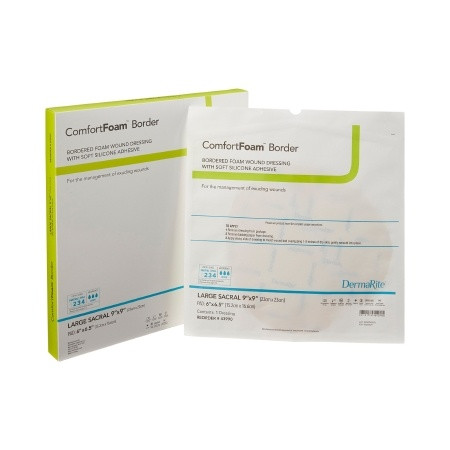 Sku: 946565DermaRite
Foam Dressing ComfortFoam™ Border 9 X 9 Inch With Border Film Backing Silicone Adhesive Sacral Sterile
$12.44 - $60.43Silicone adhesive is gentle on skin to reduce irritation and pain, enabling the dressing to be changed without stripping epidermal cells. Unique tapered edge allows dressing to lay smooth around... -
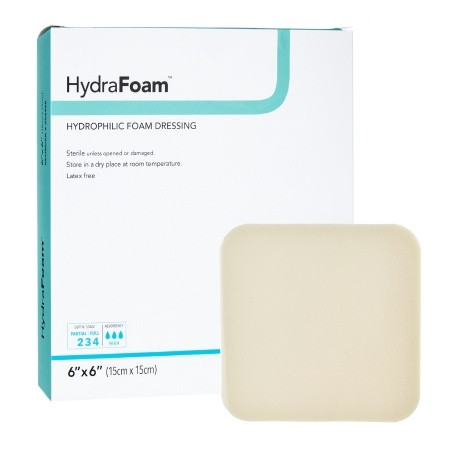
 Sku: 719723McKesson
Foam Dressing HydraFoam™ 6 X 6 Inch Without Border Without Film Backing Non-Adhesive Square Sterile
$2.46 - $23.79Silicone adhesive is gentle on skin to reduce irritation and pain, enabling the dressing to be changed without stripping epidermal cells. Unique tapered edge allows dressing to lay smooth around...